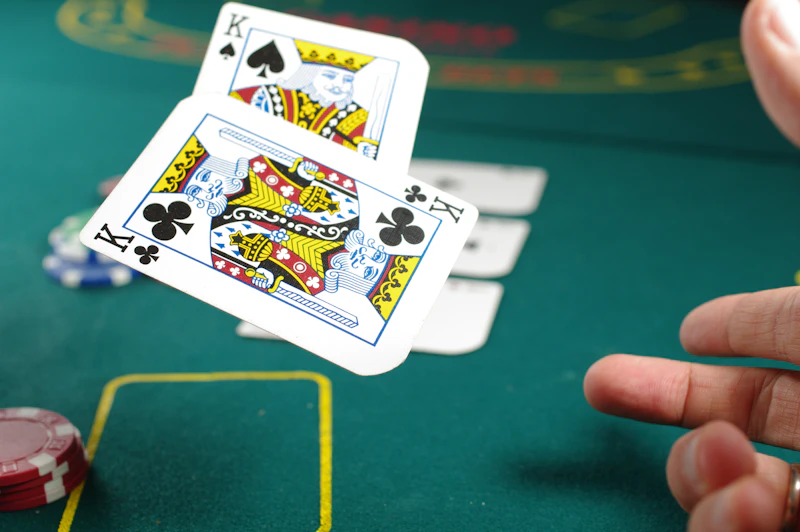
Forehead High-Card (Blind Poker): Rules, Setup & Visual Guide
Stick one playing card to your forehead without looking at it! You can see EVERYBODY ELSE'S card except your own—now decide whether to stay in or fold!
🎯 Overview: Why Everyone Loves Forehead High-Card (Blind Poker)
Forehead High-Card (Blind Man's Bluff) turns a simple deck of cards into pure psychological comedy. Every player draws 1 card and immediately holds it face-out against their own forehead without peeking at it. You can see every opponent's card around the table, and they can all see yours! Everyone then gets 30 seconds to trash-talk, bluff, or sigh dramatically before each player chooses to shouted 'IN!' or 'FOLD!' Whoever stays in with the highest card wins!
🛠️ Room Setup & Required Materials
1 standard deck of playing cards (Aces high).
🖼️ 3-Step Visual Walkthrough
Follow these three visual diagrams to explain the game to your room in under 30 seconds:
Step 1: No-Peek Forehead Stick
Deal 1 card face-down to each player. On 'UP!', everyone places their card on their forehead facing the room.
Step 2: 30s Table Mind Games
Look at everyone else's cards and bluff! Convince the person holding an Ace that they actually have a Two!
Step 3: Stay In or Fold!
On '3-2-1!', keep your card up to STAY IN or drop it to FOLD. Highest card among players who stayed in wins +2 pts!
📋 Complete Step-by-Step Rules
- Deal one card face-down to each player. Without looking at it, every player lifts their card to their forehead facing outward.
- Spend 30 seconds observing the table and trying to read other players' reactions to your forehead.
- On the count of 3, every player simultaneously either keeps their card on their forehead ('STAY IN') or lowers it to the table ('FOLD').
- Players who folded lose 0 points. Among the players who STAYED IN, the single highest card wins +2 points, while everyone else who stayed in and lost takes -1 point!
- If ONLY ONE player stays in (because they bluffed everyone else into folding!), they automatically win +2 points even if they had a 2 on their head!
🏆 Winning Condition & Scoring
First player to reach +10 points wins the Mind-Game Trophy!
🌶️ House-Rule Twist & Bonus Challenge
Low-Card Reverse Round: Every 3rd hand, declare 'LOW CARD WINS!' where 2 is the best card and Ace is the worst!
💡 Host & Strategy Pro Tips
- If you see an opponent holding an Ace or King on their forehead, burst out laughing as soon as they lift it—they will assume they have a 2 or 3 and fold immediately!
- If you see everyone else at the table has 2s, 3s, and 4s, stay in with confidence—odds are high your mystery card beats them.
👨👩👧👦 How to Adapt Forehead High-Card (Blind Poker) for Different Crowds
- For Kids & Family Game Nights: Play cooperative team rounds where parents and kids pair up together, and extend any 60-second timer to 90 seconds so younger players never feel rushed.
- For Shy Groups & Icebreakers: Start with two practice rounds where no points are tracked. Having the host go first breaks the ice immediately and sets a playful, zero-judgment tone.
- For Competitive House Parties: Use the House-Rule Twist above during the final tie-breaker round and award double points for creative answers!
❓ Frequently Asked Questions (FAQ)
How many people do you need to play Forehead High-Card (Blind Poker)?
Forehead High-Card (Blind Poker) is designed for 2–10 Players. For smaller groups on the lower end of that range, play free-for-all rounds; for larger crowds of 10 or more players, split into two balanced teams or run tournament brackets so everyone stays actively involved.
What equipment or household props are required for Forehead High-Card (Blind Poker)?
You only need: 🃏 1 Deck of Playing Cards. Setup takes approximately 0 Min. All prompts, timers, and score tracking are built directly into this PlayVibe page for free.
Can kids, teens, and adults play Forehead High-Card (Blind Poker) together?
Yes! Forehead High-Card (Blind Poker) is rated for Bluffing & Mind Games with a "Hilarious" pace. When playing with younger children or multi-generational family groups, simply select family-friendly prompts and allow an extra 15 seconds per turn.